Ourika Valley
By the Ourika Valley team · Updated
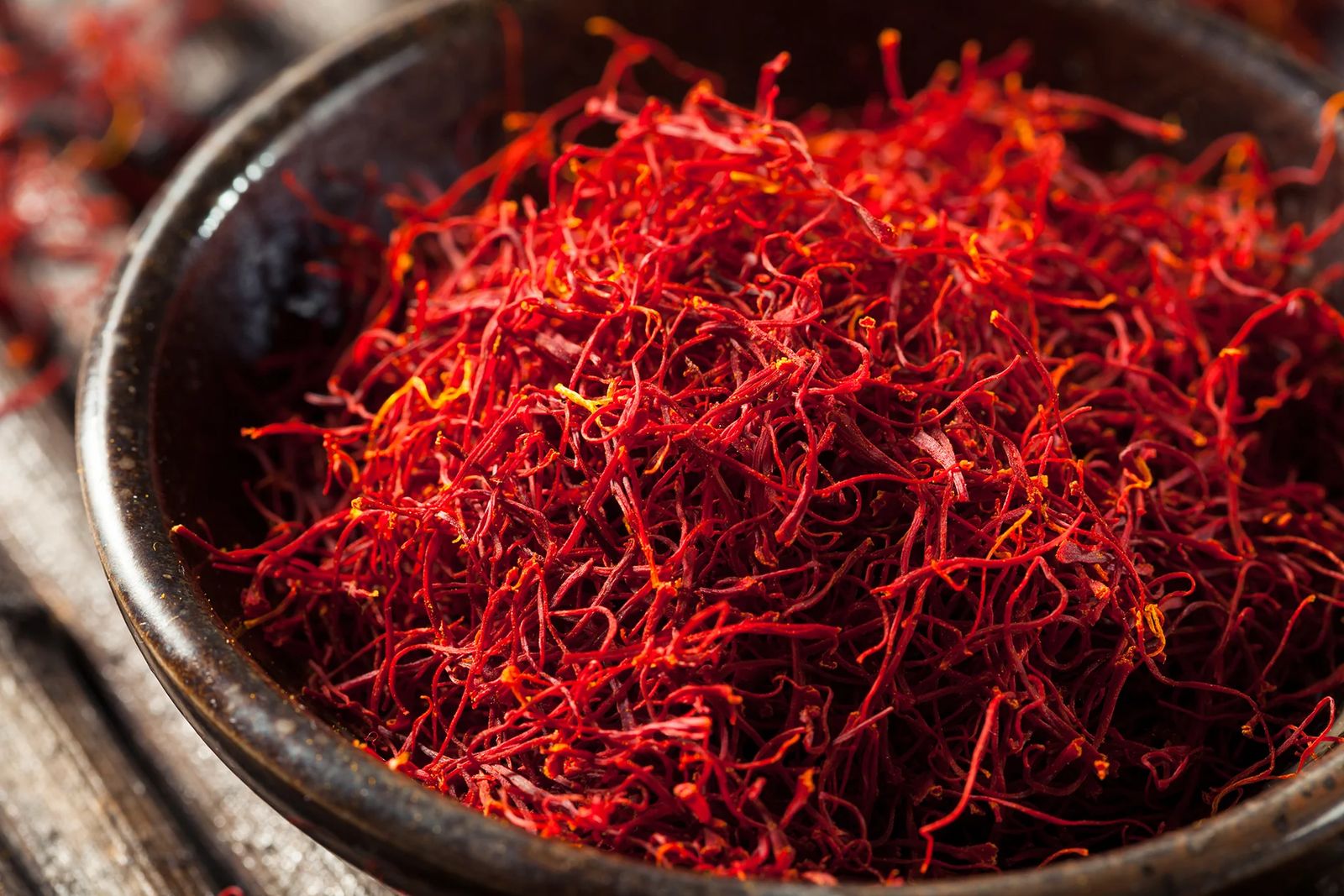
- Saffron = the three red stigmas of the saffron crocus, picked and separated by hand
- About 150 flowers for one gram of dried saffron
- Flowering in autumn, late October and November; flowers are picked in the morning
- Two saffron farms on the Ourika road: Le Paradis du Safran and Terre de Safran
- Real saffron colours water slowly and its threads stay red and whole
- Private saffron half day or full day from Marrakech: 120 EUR per vehicle for 1 to 7 people
Short answers
How much does a saffron tour from Marrakech to the Ourika cost?
Both private saffron outings from Marrakech to the Ourika Valley cost 120 EUR per vehicle for 1 to 7 people and 200 EUR for 8 to 17, not per person, with driver and pickup at your hotel or riad. Entrance fees are paid on site in dirhams: 150 MAD per person at Le Paradis du Safran in 2026.
Should I choose the saffron half day or the full saffron day?
Choose the saffron half day if you have only a morning: pickup at 10:00, Le Paradis du Safran and the bio-aromatic garden near Tnine Ourika, back in Marrakech around 15:00. Choose the full saffron day to add a village cooperative, lunch by the river and Setti Fatma with the walk towards the waterfalls, for the same price per vehicle.
When does saffron flower in the Ourika and which days can you visit?
The saffron crocus flowers in the Ourika Valley from late October into November, and the flowers are picked in the morning. Le Paradis du Safran, about 30 km from Marrakech, opens 11:00 to 16:00 (last entry 15:00) and closes on Monday and Tuesday, so our saffron days run Wednesday to Sunday. Harvest dates are not published.
Can children visit a saffron farm in the Ourika?
Not under 12 at Le Paradis du Safran, the saffron farm on the Ourika road: its website says they are not admitted, so neither of our saffron days suits them as planned. With younger children, the bio-aromatic garden near Tnine Ourika, a women's argan cooperative or the Anima garden are better stops on the same road.
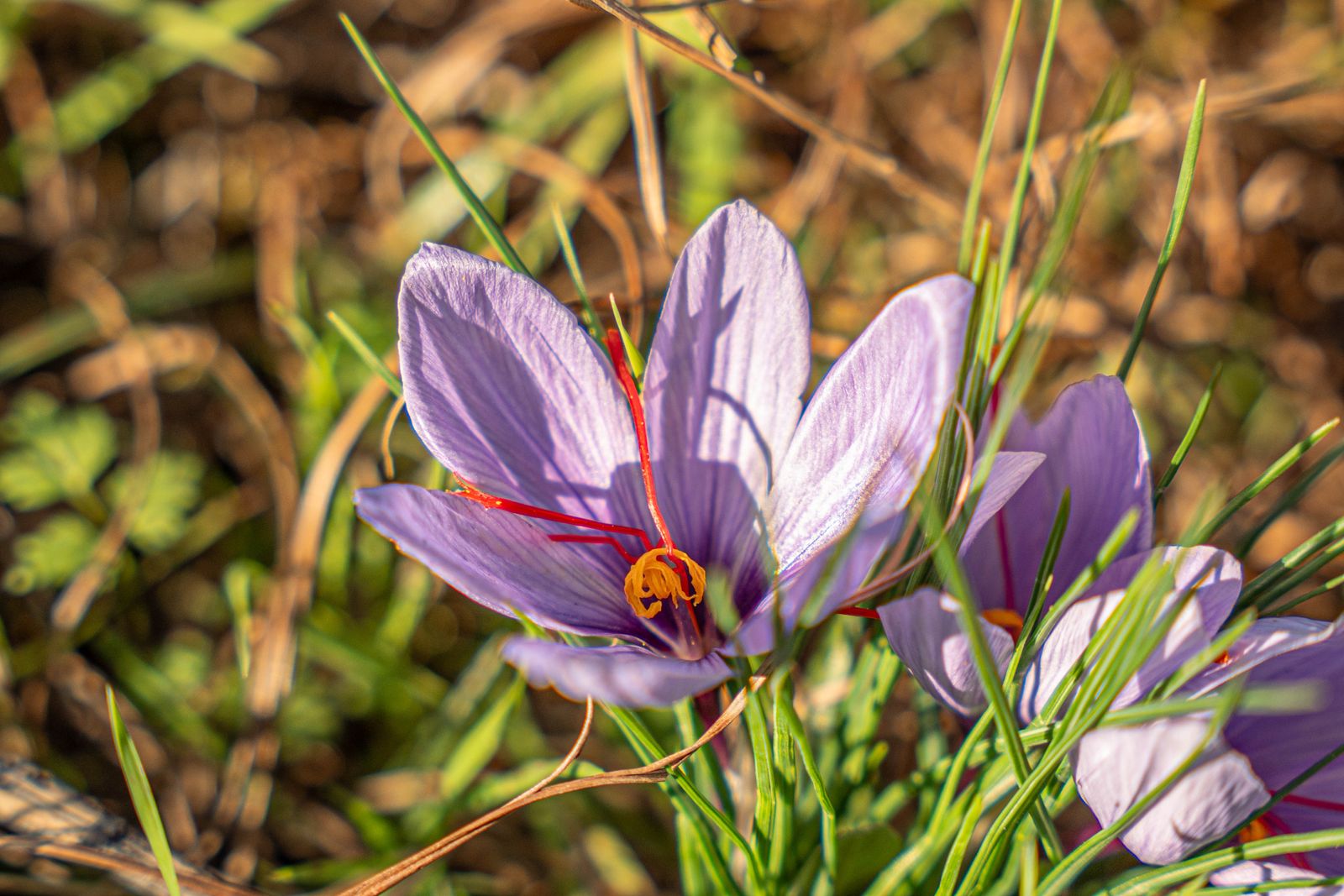
Saffron is the dried red stigma of the saffron crocus, Crocus sativus, a flower that blooms in autumn. Each flower gives three stigmas, and it takes about 150 flowers to make one gram of dried saffron, which is why the spice costs so much. In the Ourika Valley, the crocus flowers from late October into November, and the flowers are picked by hand in the morning. Two farms on the Ourika road open their saffron to visitors: Le Paradis du Safran, an organic saffron farm and botanical garden about 30 km from Marrakech (150 MAD entry in 2026, closed Monday and Tuesday), and Terre de Safran in the village of Takatert. Morocco's saffron capital is Taliouine, further south, whose saffron carries a protected designation of origin. We run two private saffron days from Marrakech at 120 EUR per vehicle for 1 to 7 people, Wednesday to Sunday.
The saffron signs appear on the Ourika road long before the mountains, and saffron is one of the things travellers ask us about most once we leave Marrakech. This guide puts in one place what we tell them in the car: what the spice is, when the flowers come out, which farms to visit, who does the work, how to buy real saffron, and how to fit it all into a day.
What is saffron?
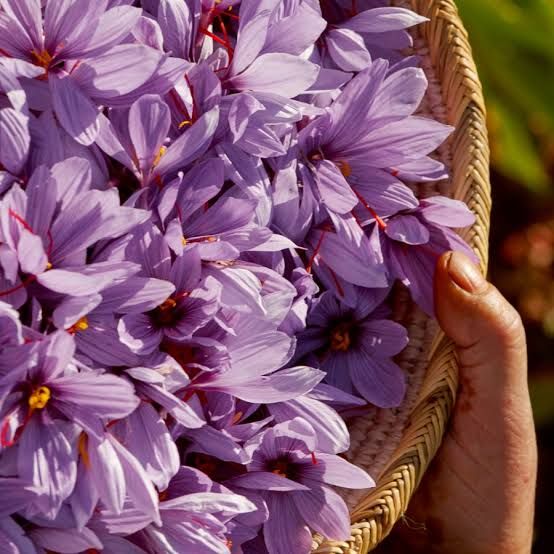
Saffron is a spice made from the crimson stigmas of the saffron crocus, Crocus sativus, which flowers in autumn. Each flower has a style that splits into three red stigmas; these are picked out by hand and dried. About 150 flowers make one gram of dried saffron, and about 150,000 flowers make a kilogram.
The saffron crocus is a strange plant. It is sterile and cannot make seed, so it is grown from corms, underground bulbs that multiply in the soil and are divided and replanted by hand. The purple flower lasts only a short time, which is why the harvest is compressed into a few weeks and starts early in the morning.
Three natural compounds give saffron its character. Crocin gives the yellow-orange colour that saffron passes to rice, tagines and tea. Picrocrocin gives its slightly bitter taste. Safranal, which forms as the stigmas dry, gives most of its smell. These three compounds are also what laboratories measure to grade saffron under the international standard ISO 3632, which sorts it into categories from I, the finest, to III.
| Saffron in figures | Value |
|---|---|
| Part of the plant used | The three red stigmas of each flower |
| Flowers for 1 gram of dried saffron | About 150 |
| Flowers for 1 kilogram | About 150,000 |
| Stigmas for 1 kilogram | About 440,000 |
| Picking time for 150,000 flowers | About 40 hours of work |
| Moisture lost when drying | About 80 percent |
| Colour, taste and smell | Crocin, picrocrocin and safranal |
| Quality standard | ISO 3632, categories I to III |
When does saffron flower in the Ourika Valley?
The saffron crocus flowers in autumn, from late October into November. The flowers are picked in the morning; in Taliouine, pickers start at dawn, before the flowers open. There, the harvest season lasts about a month and each field is picked over ten days to two weeks.
Outside those weeks you will not see the purple flowers. You can still visit the farms, walk through the plots, smell and taste the dried spice and drink saffron tea, but the field looks like a field. The farms do not publish their harvest dates in advance, because the flowers come when the weather decides. If seeing the flowers is the reason for your trip, plan your visit for November and ask us a few days before: we check with the farms.
| When you visit | What you see at a saffron farm |
|---|---|
| Late October to November | Purple crocus flowers in the field, picking in the morning, stigmas being separated and dried |
| Rest of the year | The saffron plots, the garden, the dried spice and saffron tea, no flowers |
| Any day from Wednesday to Sunday | Le Paradis du Safran open from 11:00 to 16:00, last entry 15:00 |
| Monday and Tuesday | Le Paradis du Safran closed |
For the weather in autumn, cooler than Marrakech and sometimes wet, see our page on the Ourika Valley weather.
Where does Moroccan saffron come from?
Most Moroccan saffron comes from Taliouine, a small town in the Anti-Atlas between Taroudant and Ouarzazate. A 2013 report by Aramco World described it as the capital and heart of Morocco's saffron industry, with about 4,000 kilos in 2012, around 98 percent of the national harvest, and nearly three dozen cooperatives in the area.
In 2010, Morocco's Ministry of Agriculture recognised the designation of origin "Safran de Taliouine" and approved its specifications; the text was amended in 2018. Under this protected name, the corms, the harvest, the drying and the packing must all take place within the defined area, which covers communes of the Taroudant and Ouarzazate provinces. Producers there say saffron is also sold with the Taliouine name without meeting these rules, so the label and the seller matter.
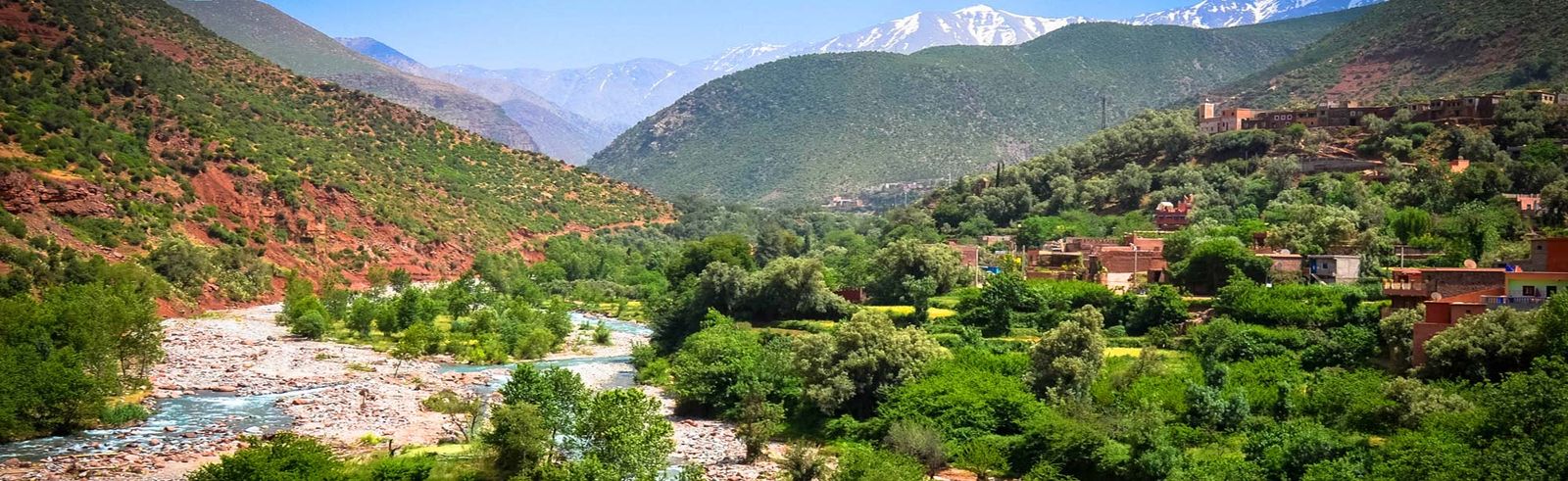
The Ourika Valley is not a great saffron region in volume. What it offers is something Taliouine cannot, for a traveller staying in Marrakech: saffron fields you can walk through about 30 km from the city, on the same road as the gardens, the cooperatives and the waterfalls of the valley.
Which saffron farms can you visit in the Ourika?
Two farms on the Ourika road show saffron to visitors. Le Paradis du Safran is an organic saffron farm and botanical garden that charges 150 MAD in 2026 and closes on Monday and Tuesday. Terre de Safran, in the village of Takatert, offers a shorter guided visit ending with saffron tea, at a lower reported price.
Le Paradis du Safran
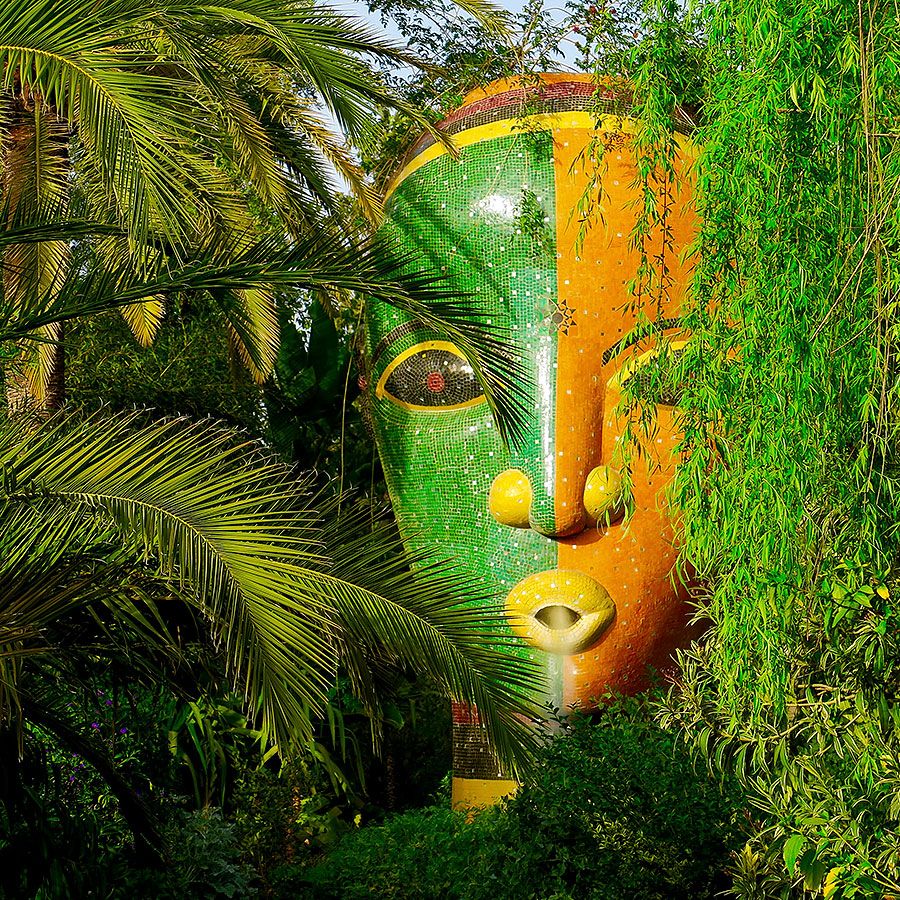
Le Paradis du Safran is an organic saffron farm and botanical garden on the Ourika road, about 30 km from Marrakech, created by Christine Ferrari. It is open from 11:00 to 16:00, with last entry at 15:00, and closed on Monday and Tuesday. Entry costs 150 MAD per person in 2026 and includes a welcome drink, a free visit of the organic garden, a barefoot path, saffron tea and a small snack. You walk at your own pace, and the saffron plots are one part of a larger garden of plants.
It is the stop we use on both our saffron days, because it is calm, well explained and open to the visitor without a sales pitch. For the full practical sheet (what the ticket includes, how long to allow, children, how to get there), read our page on the saffron garden of the Ourika.
Terre de Safran
Terre de Safran is a saffron farm in the village of Takatert, in the Ourika. The visit is guided and ends with a glass of saffron tea. On Tripadvisor it has a rating of 4.3 out of 5 from only 10 reviews, so the picture is thin. One visitor reported paying about 20 MAD per person; we have not been able to confirm that price. Some visitors also report pressure to buy saffron at the end of the visit. It can be a short, cheap stop, as long as you go in knowing that you are free to leave without buying.
| Le Paradis du Safran | Terre de Safran | |
|---|---|---|
| Where | Ourika road, about 30 km from Marrakech | Village of Takatert, Ourika |
| Type of visit | Free walk in an organic garden and saffron farm | Guided visit of the saffron farm |
| Price | 150 MAD per person in 2026 | About 20 MAD reported by one visitor, unconfirmed |
| Included | Welcome drink, garden, barefoot path, saffron tea, small snack | Saffron tea at the end |
| Opening | 11:00 to 16:00, last entry 15:00, closed Monday and Tuesday | Not published |
| Children | Not admitted under 12 | Not published |
| Points to know | Calm, unhurried, no booking needed | Small number of reviews; some visitors report pressure to buy |
| Stop on our saffron days | Yes | On request |
The bio-aromatic garden, a natural pairing
The bio-aromatic garden of Ourika, near Tnine Ourika and about 35 km from Marrakech, does not grow saffron as its main crop, but it completes a saffron morning well: aromatic and medicinal plants, the smell of herbs, and the story of a Moroccan natural cosmetics brand born in the valley. Entry costs 35 MAD per adult (September 2026), and it is open from 9:00 to 17:00 from October to May. For another garden on the way out of Marrakech, the Anima garden suits an early start.
Who does the work of the saffron harvest?
Mostly women. In Morocco's saffron areas, women do most of the picking, moving through the fields just after dawn, and the separation of the red stigmas from each flower is done mostly, though not only, by women. The work has to be fast: in Taliouine, the flowers are picked at dawn, for only two or three hours a day, before they open.
The gesture is simple and endlessly repeated. The picker pinches the flower at its base and drops it into a basket. Back at the house, the flower is opened, the three red threads are pulled out, and the petals and yellow stamens fall to the ground. The threads are then dried, in the sun or indoors, and lose about 80 percent of their moisture. Multiply that by 150 flowers for each gram and you understand both the price of the spice and the value of this work.
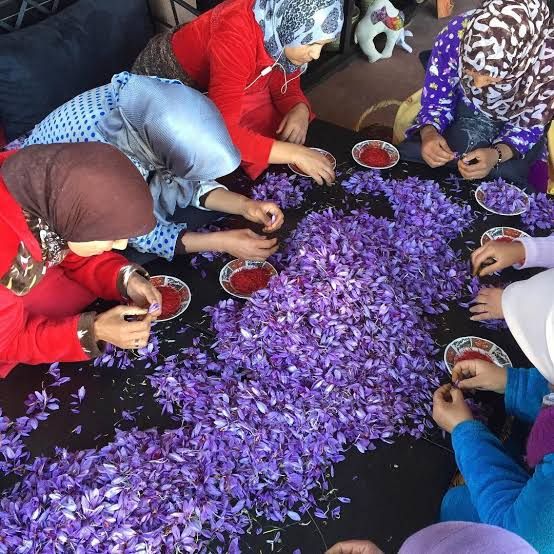
In Taliouine, saffron supports about 1,500 families, and much of the trade goes through cooperatives. When you buy saffron, the question of who grew and picked it is worth asking. Our guide to cooperatives and villages of the valley and the women's argan cooperative explain how we choose the places where we stop, and our page on responsible travel in the Ourika explains why.
How to recognise real saffron
Real saffron comes as fine deep red threads that colour water yellow slowly and stay whole. Fake saffron colours water at once, often falls apart, and smells weak or bitter. Buy whole threads rather than powder, from a seller who tells you the weight and the origin.
Saffron is so expensive that it attracts fraud. The most common substitutes are safflower, a cheap orange flower sold as "saffron" in many markets, corn silk, dyed fibres, and threads of other plants. Powdered saffron can be cut with turmeric or paprika, and honey or oil is sometimes added to make the threads heavier.
| Test | Real saffron | Fake or cut saffron |
|---|---|---|
| In warm water | Releases a yellow colour slowly, over many minutes, up to an hour | Colours the water red or orange almost at once |
| The threads after soaking | Stay red and whole | Lose their colour, fall apart |
| Look | Fine deep red threads, three stigmas joined at the base | Thick, uneven, very bright or orange fibres |
| Smell | Earthy and floral | Weak, bitter or metallic |
| Taste | Slightly bitter, never sweet | Bland or strange |
| Form | Whole threads | Powder, easy to mix with turmeric or paprika |
| Price | High, always quoted per gram | Very cheap for a large jar |
A few habits help in the valley as in the souk. Ask the price per gram, not per pot. Ask to see the threads in the jar before paying. Prefer a sealed pack with the weight and origin printed on it. And if a price looks too good to be true, it is almost certainly not saffron.
How much does saffron cost in Morocco?
We do not publish shop prices for saffron, because they change with the harvest and the seller, and we have no current independent figure to give you. As a historical reference, a 2013 report on Taliouine gave 30 to 50 MAD per gram for Taliouine saffron at the time, against 8 MAD per gram in 2006. Whatever the price today, compare it per gram, and remember that 150 flowers went into each of those grams.
| What to check before you buy | Why |
|---|---|
| Price per gram | The only way to compare jars of different sizes |
| Weight printed on the pack | Saffron is sold by the gram; a vague "pot" hides the quantity |
| Whole threads, not powder | Powder is easier to cut with other spices |
| Origin and producer | Taliouine saffron has a protected designation of origin |
| No pressure | A good seller lets you taste, smell and leave |
You are never obliged to buy at a farm or a cooperative on our days: taste, ask your questions, and leave if the price or the pressure does not suit you.
Our saffron experiences in the Ourika
We offer two private saffron days from Marrakech that you can book now, and a third experience in preparation for the flowering season. Both bookable days cost 120 EUR per vehicle for 1 to 7 people and 200 EUR for 8 to 17, with entrance fees paid on site, and run Wednesday to Sunday because Le Paradis du Safran closes on Monday and Tuesday.
| Experience | What you do | Duration | Price | Status |
|---|---|---|---|---|
| Saffron and gardens half day | Pickup at 10:00, Le Paradis du Safran at 11:00, bio-aromatic garden near Tnine Ourika | Back around 15:00 | 120 EUR per vehicle 1-7, 200 EUR 8-17; lunch option 20 EUR per person | Bookable, Wednesday to Sunday |
| Saffron and Ourika Valley full day | Village or cooperative stop, Le Paradis du Safran from 11:00, lunch by the river, Setti Fatma and the walk towards the waterfalls | Back late afternoon | 120 EUR per vehicle 1-7, 200 EUR 8-17; lunch, breakfast and local guide options | Bookable, Wednesday to Sunday |
| Saffron harvest morning | Early-morning visit to a saffron farm in flower: picking, separating the stigmas with the women, saffron tea | Morning | Not yet set | Coming in the flowering season |
The half day suits travellers who want saffron and plants without spending the whole day in the car: a calm morning, two gardens, and you are back in Marrakech for the afternoon. The full day suits those who want saffron as the start of a real day in the valley, with lunch by the river and the walk towards the Setti Fatma waterfalls. The harvest morning will be for travellers in Marrakech in November who want to see the flowers picked; it is not open for booking yet.
On both days, you book online on the page with a 50% deposit, by PayPal or by card through PayPal, and pay the balance in cash to the driver on the day. Cancellation is free up to 48 hours before, with the deposit refunded. If the weather makes the valley unsafe on your date, we offer another date or refund the deposit. Our WhatsApp number, +212 661 454 738, is there for questions before you book.
Which saffron day should you choose?
Choose the half day if you have only a morning, travel with someone who does not want a long day, or simply want saffron and gardens. Choose the full day if you also want to see the Ourika Valley itself, Setti Fatma and the river. Both stop at Le Paradis du Safran at the same time of day.
| Your situation | Our advice |
|---|---|
| Only one morning free | Half day, back around 15:00 |
| First and only visit to the Ourika | Full day, saffron plus the valley and Setti Fatma |
| Keen on plants and gardens | Half day, with the bio-aromatic garden |
| Want to walk towards the waterfalls | Full day, with the local guide option |
| Children under 12 | Neither as planned: Le Paradis du Safran does not admit them; ask us for another route |
| Monday or Tuesday | Neither: the farm is closed; see the Monday souk of Tnine Ourika or a private day trip |
| In Marrakech in November | Either, and ask us whether the flowers are out |
If you would rather spend the whole day in the valley without saffron, our private Ourika Valley day trip and half day trip cover the classic route, and our guide to Setti Fatma explains the village at the end of the road.
Practical tips for a saffron visit
Go from Wednesday to Sunday, arrive at Le Paradis du Safran after its 11:00 opening and before its 15:00 last entry, and bring shoes you can slip off easily for the barefoot path. Carry dirhams in cash for entrance fees and any saffron you buy. In autumn, take a warm layer: the valley is cooler than Marrakech.
- Cash: entrance fees (150 MAD at Le Paradis du Safran, 35 MAD per adult at the bio-aromatic garden) are paid on site in dirhams.
- Time: allow one hour to an hour and a half at Le Paradis du Safran.
- Photos: ask before photographing people at work in the fields or the houses.
- Buying: you are free to taste and leave without buying.
- Season: for flowers, November is the safest bet, but the date depends on the weather.
Sources
- Wikipedia, Saffron: Crocus sativus, three stigmas per flower, sterile plant grown from corms, 150 flowers per gram, 150,000 flowers and 40 hours of picking per kilogram, crocin, picrocrocin, safranal, ISO 3632 and common adulterants
- Aramco World, "Morocco's Threads of Red Gold" (2013): Taliouine as the capital of Moroccan saffron, 4,000 kg and 98 percent of the harvest in 2012, cooperatives, harvest timing, women's work, drying and prices per gram
- WIPO Lex, Order No. 1355-10 of 30 April 2010 recognising the designation of origin "Safran de Taliouine" and approving its specifications
- Aujourd'hui le Maroc, 13 August 2010, "Quatre produits du terroir obtiennent une reconnaissance": the Safran de Taliouine designation, Taroudant and Ouarzazate provinces, production steps inside the area (in French)
- Le360, 17 December 2018, saffron producers of Taliouine against counterfeits: protected label, picking at dawn before the flower opens, about 1,500 families (in French)
- Tasting Table, how to spot the difference between real and fake saffron: water test, threads, taste and smell
- Le Paradis du Safran, official website: opening hours, 2026 price and what the visit includes
- Tripadvisor, Terre de Safran, Takatert (Ourika): rating, number of reviews and visitor reports
Frequently asked questions
Is there saffron in the Ourika Valley?
Yes. Saffron is grown on the Ourika road, about 30 km from Marrakech, mainly by farms that welcome visitors: Le Paradis du Safran, an organic saffron farm and botanical garden, and Terre de Safran in the village of Takatert. Morocco's main saffron region is further south, around Taliouine in the Anti-Atlas.
When can you see saffron flowers in the Ourika?
In autumn. The saffron crocus flowers from late October into November, and the flowers are picked in the morning, before they open fully. Outside these weeks you see the plots and learn about the spice, but not the purple flowers. Farms do not publish harvest dates, so ask before you plan around them.
How much does it cost to visit a saffron farm in the Ourika?
Le Paradis du Safran charges 150 MAD per person in 2026, with a welcome drink, saffron tea, the barefoot path and a small snack. At Terre de Safran, one visitor reported about 20 MAD per person; we have not confirmed that price. Entrance fees are paid on site, not in our tour price.
Can you book a saffron tour from Marrakech?
Yes. Our private saffron half day visits Le Paradis du Safran and the bio-aromatic garden, back around 15:00. Our full saffron day adds the valley and Setti Fatma. Both cost 120 EUR per vehicle for 1 to 7 people and 200 EUR for 8 to 17, and run Wednesday to Sunday.
Why is saffron so expensive?
Because everything is done by hand. Each flower gives only three stigmas, and it takes about 150 flowers to make one gram of dried saffron, or about 150,000 flowers for a kilogram. The flowers are picked in a few weeks of autumn, and the red threads are separated from each flower one by one.
How do you know if saffron is real?
Drop a few threads into warm water. Real saffron releases its yellow colour slowly, over many minutes, and the threads stay red and whole. Fake saffron colours the water at once and often falls apart. Real saffron smells earthy and floral. Buy whole threads rather than powder, which is easier to cut with turmeric.
Can children visit the saffron farm?
Not at Le Paradis du Safran: its website says children under 12 are not admitted. With younger children, the bio-aromatic garden near Tnine Ourika, a women's argan cooperative or the Anima garden are better stops on the same road. Tell us their ages when you book and we adapt the day.
Can you visit on Monday or Tuesday?
Not Le Paradis du Safran, which is closed on Monday and Tuesday. That is why our two saffron days run Wednesday to Sunday only. On a Monday, the Tnine Ourika souk is a good reason to go to the valley instead, with or without a saffron stop elsewhere.
Where does Moroccan saffron come from?
Mostly from Taliouine, in the Anti-Atlas between Taroudant and Ouarzazate. Its saffron has a protected designation of origin, Safran de Taliouine, recognised by Morocco's Ministry of Agriculture in 2010. A 2013 report put Taliouine at about 98 percent of the country's saffron in 2012.
Can you take part in the saffron harvest?
We are preparing an early-morning harvest visit at a saffron farm during the flowering season, to pick flowers and watch the stigmas being separated, followed by saffron tea. It is not open for booking yet. In the meantime, our half day and full day include Le Paradis du Safran.